Investing in Safer Mobility: RSAI Strengthens Road Safety Education at the Liberia Revenue Authority
Improving road safety takes more than enforcement. It takes continuous education, responsible driving, and a shared commitment to protecting lives.
- 3 daysOctober 21–23, 2026
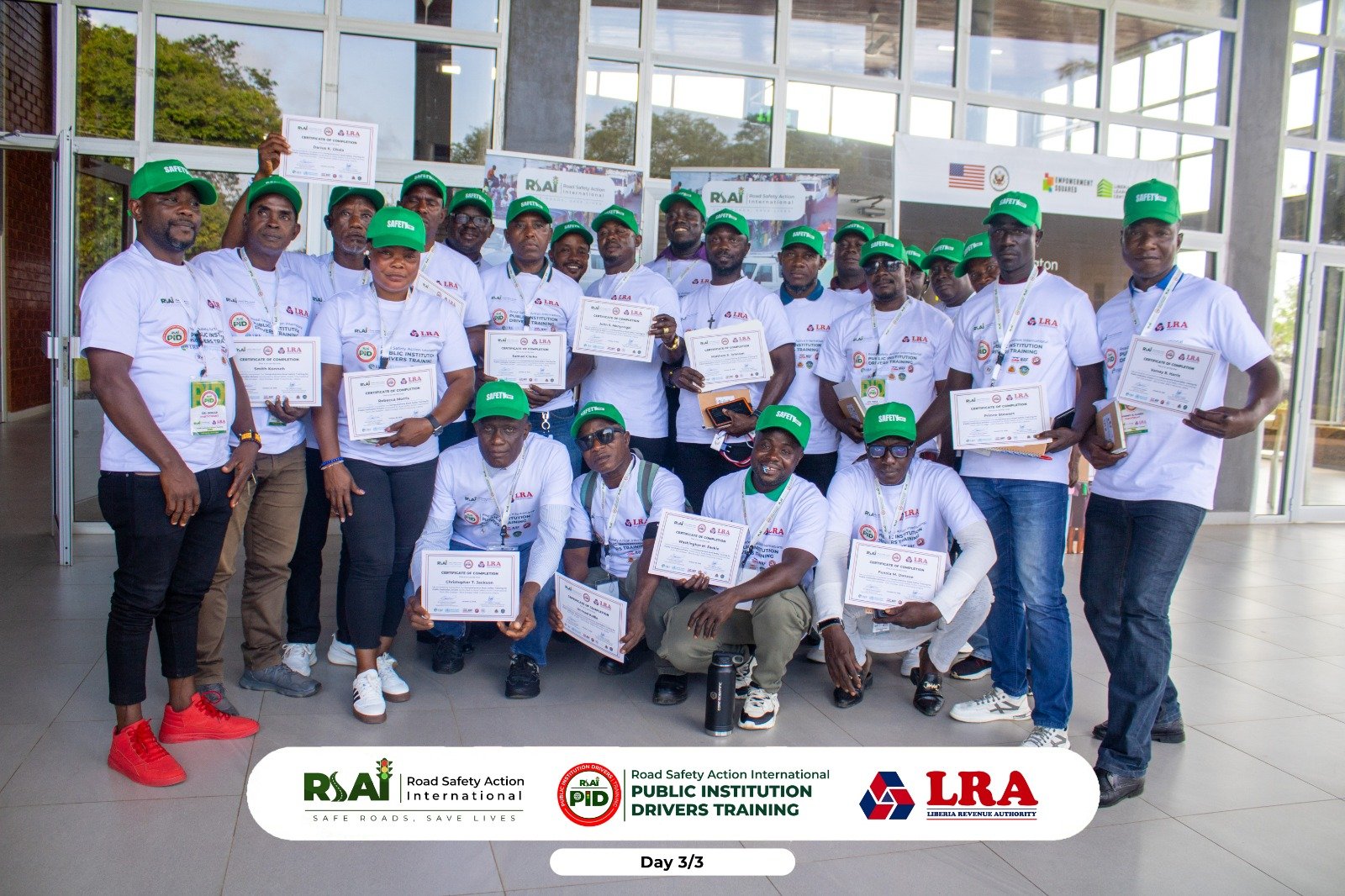
- 100LRA personnel trained
- HybridIn-person and online
- 5Core road safety areas
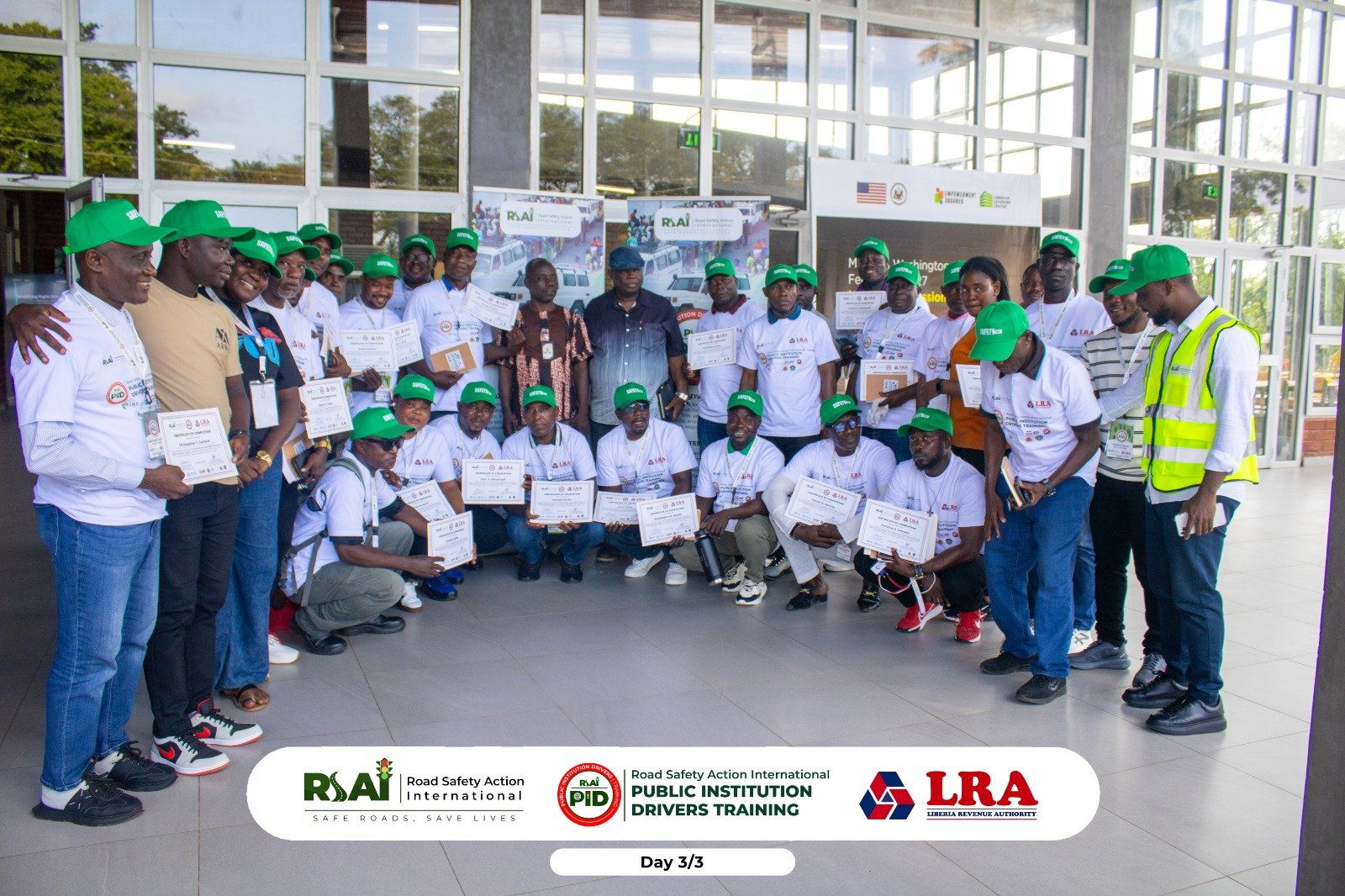
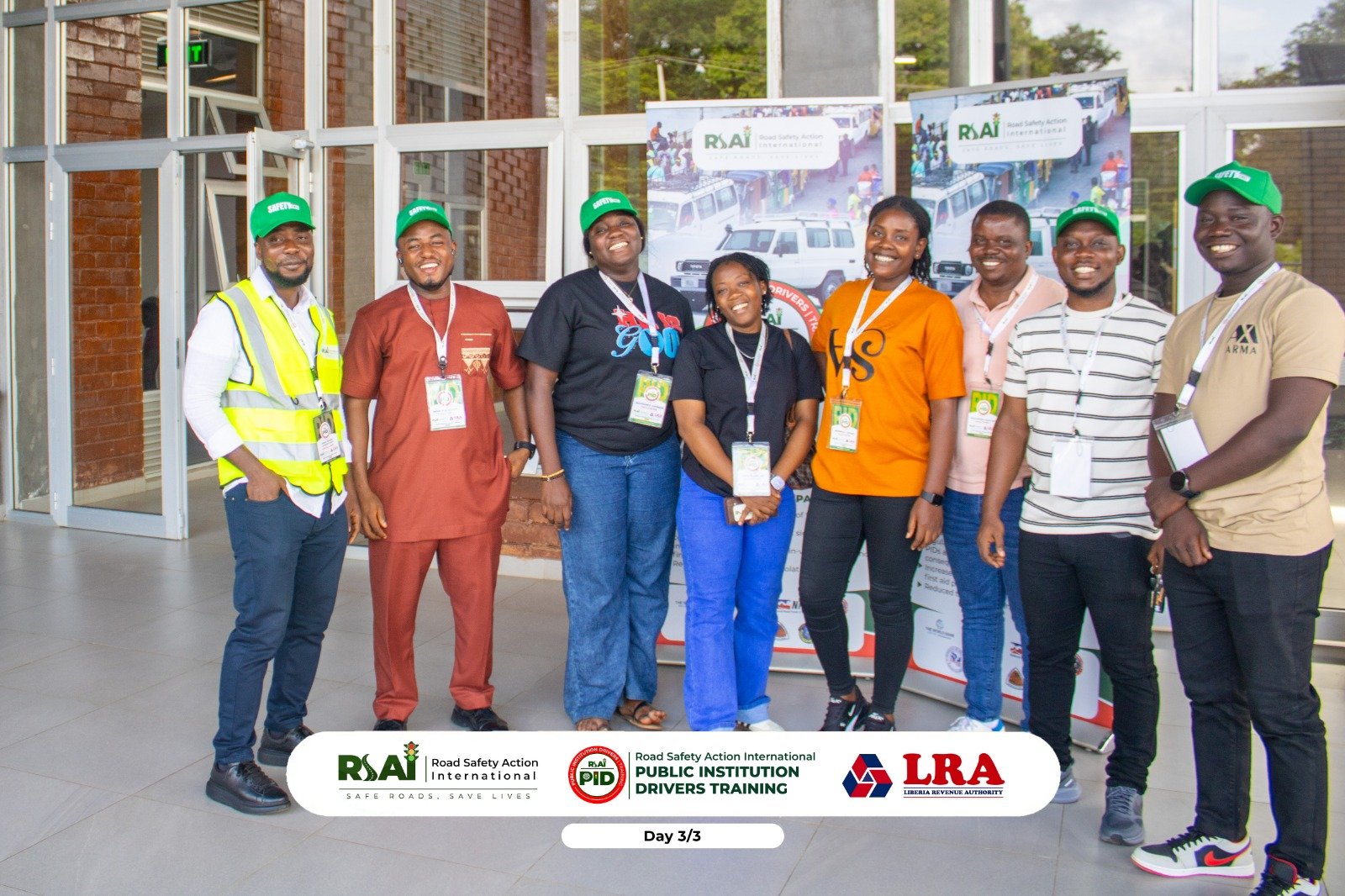
From October 21–23, 2026, Road Safety Action International (RSAI) delivered a three-day Public Institution Drivers (PID) Training Program for 100 personnel of the Liberia Revenue Authority (LRA). The training combined in-person classroom sessions with online participation, so staff could take part around their institutional schedules.
Through the PID Training Program, RSAI works with public institutions across Liberia to promote safer driving practices and strengthen transport safety. For public institutions, safe transportation supports daily operations, staff mobility and the effective delivery of public services. This edition focused on road safety education, understanding of traffic laws, responsible vehicle use, and identifying and managing road-related risks.
Building road safety education through institutional training
Road safety is a shared responsibility that extends beyond the individual behind the steering wheel.
It involves drivers, passengers, vehicle users, transport managers, institutional leadership, and every person who uses the road. For institutions such as the LRA, safer mobility means encouraging employees to understand road risks, comply with traffic regulations, and act responsibly during official transportation activities.
Through this engagement, RSAI sought to reinforce how individual decisions contribute to safer institutional transport operations, and to integrate road safety into workplace practices so that the protection of lives and institutional assets remains a priority.
Five core areas of training
The three-day training addressed the areas of road safety most relevant to institutional drivers and other road users:
-
Institutional road safety and professional responsibility
Professional conduct, accountability, discipline, and responsible decision-making in institutional transport operations.
-
Safe roads and hazard awareness
Recognizing road hazards, understanding road conditions, anticipating risks, and adjusting driving behavior to prevent crashes.
-
Vehicle safety and preventive maintenance
Vehicle inspections, identifying mechanical defects, maintaining readiness, and ensuring vehicles are safe before use.
-
Responsible road user behavior and traffic law compliance
Complying with Liberia's traffic laws and avoiding speeding, distracted driving, fatigue-related driving, and unsafe overtaking.
-
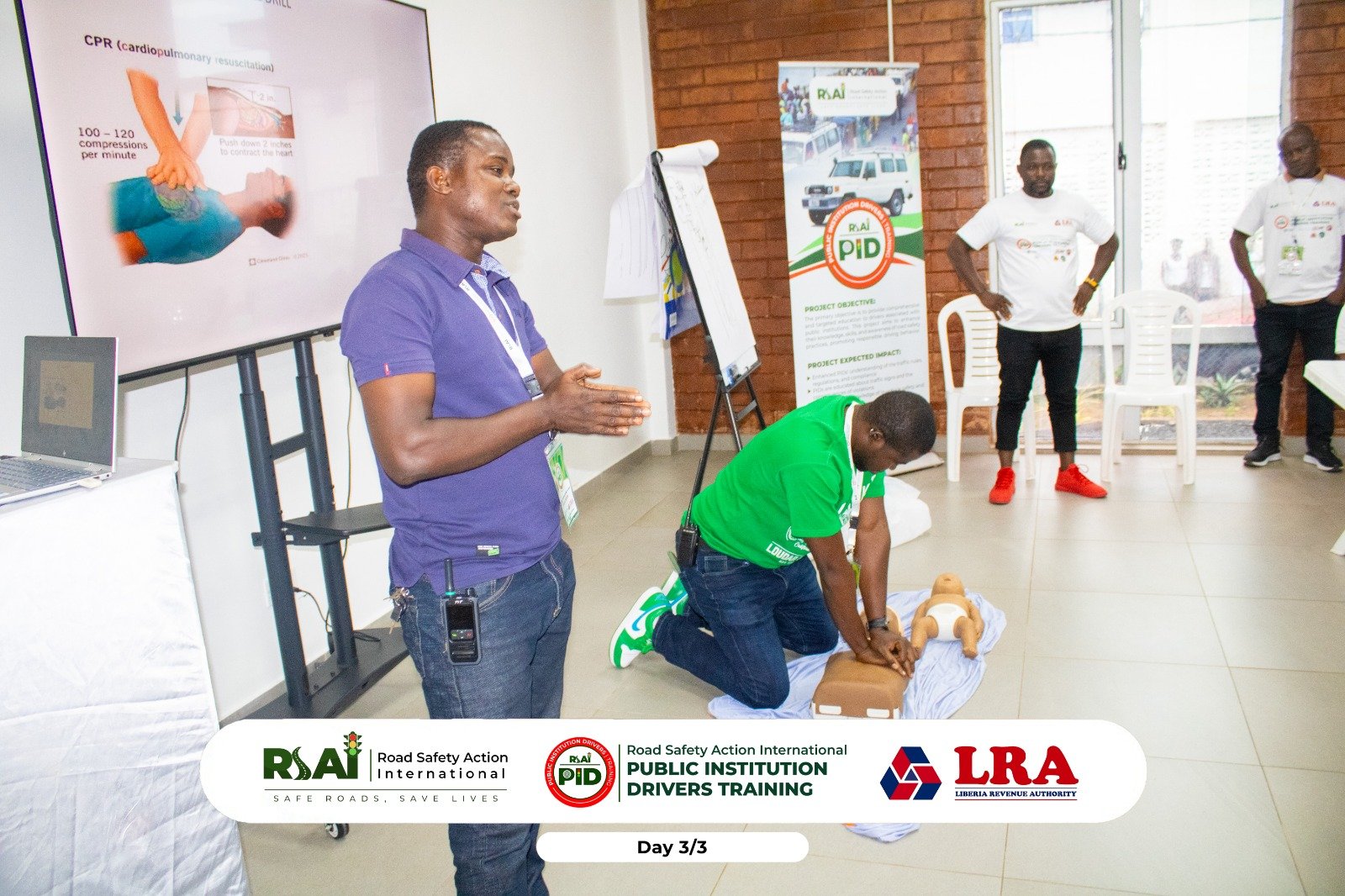
Emergency response and post-crash management
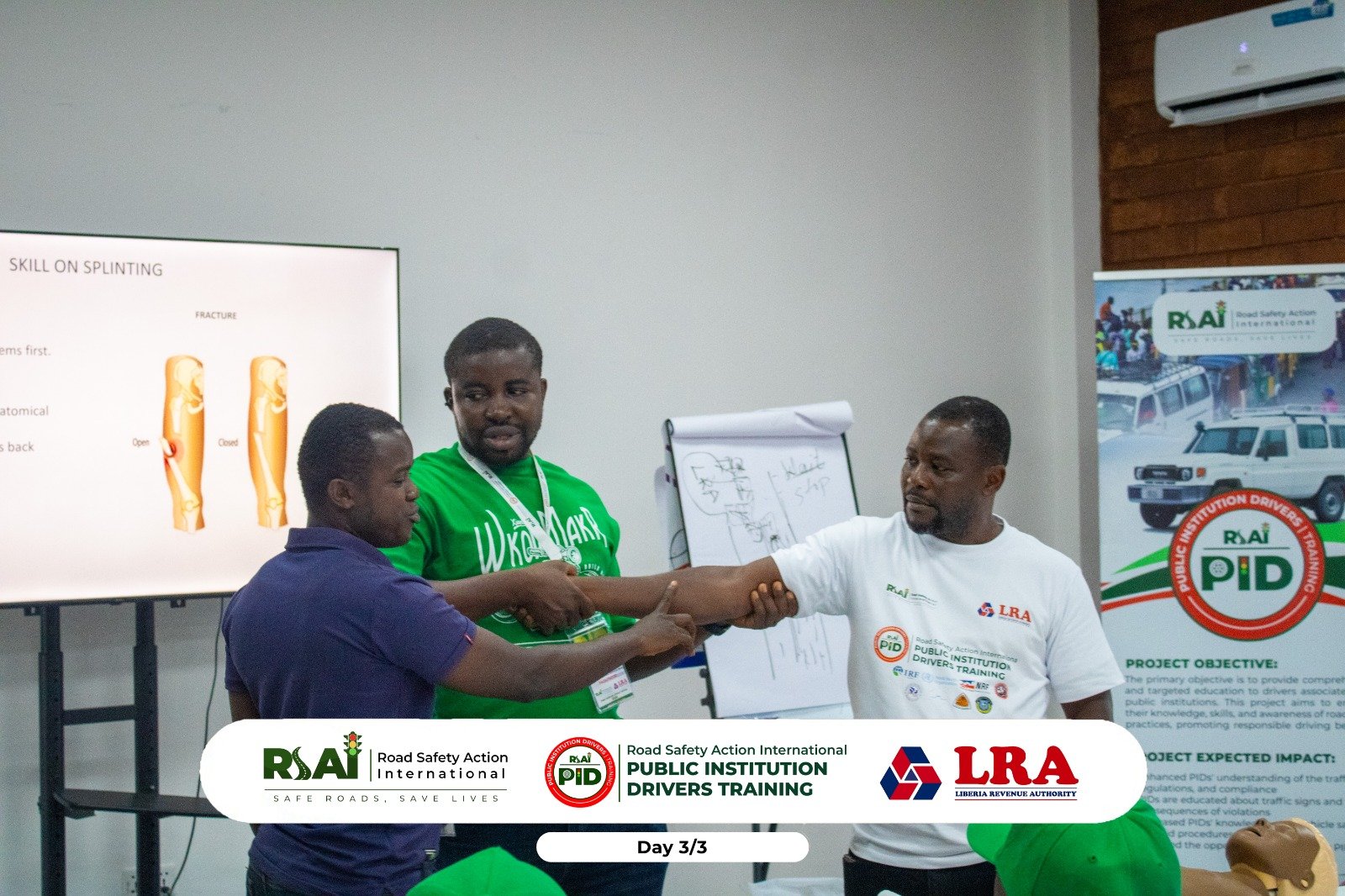
Crash scene safety, incident management, fire safety, and appropriate responses following road traffic incidents.
Combining in-person and online learning
RSAI delivered the program through a hybrid approach, integrating in-person classroom instruction with online sessions. The format provided flexibility while keeping a structured approach, and showed how technology can complement traditional classroom training in institutional capacity development.
Depending on the session, participants learned through:
- Presentations
- Group discussions
- Case studies
- Practical demonstrations
- Vehicle inspection exercises
- Scenario-based learning
Each method was designed to help participants connect road safety principles with their everyday responsibilities.
The institutional value of safer mobility
Investing in road safety education can contribute to improved institutional transport practices and a safer working environment. For the LRA, strengthening road safety knowledge among personnel supports the broader goal of protecting employees, passengers, vehicles, and other road users.
The training is expected to contribute to
- Increased awareness of safe driving practices and traffic regulations
- Improved recognition of road hazards and risky driving behaviors
- Greater attention to vehicle inspections and preventive maintenance
- Better understanding of emergency preparedness and post-crash responsibilities
- Reduced exposure to preventable road traffic risks
- Stronger appreciation of individual responsibility for institutional transport safety
- Safer and more efficient institutional operations
Lasting impact requires continued reinforcement through institutional policies, supervisory oversight, regular vehicle inspections, and consistent application of safe driving procedures.
Strengthening partnerships for road safety in Liberia
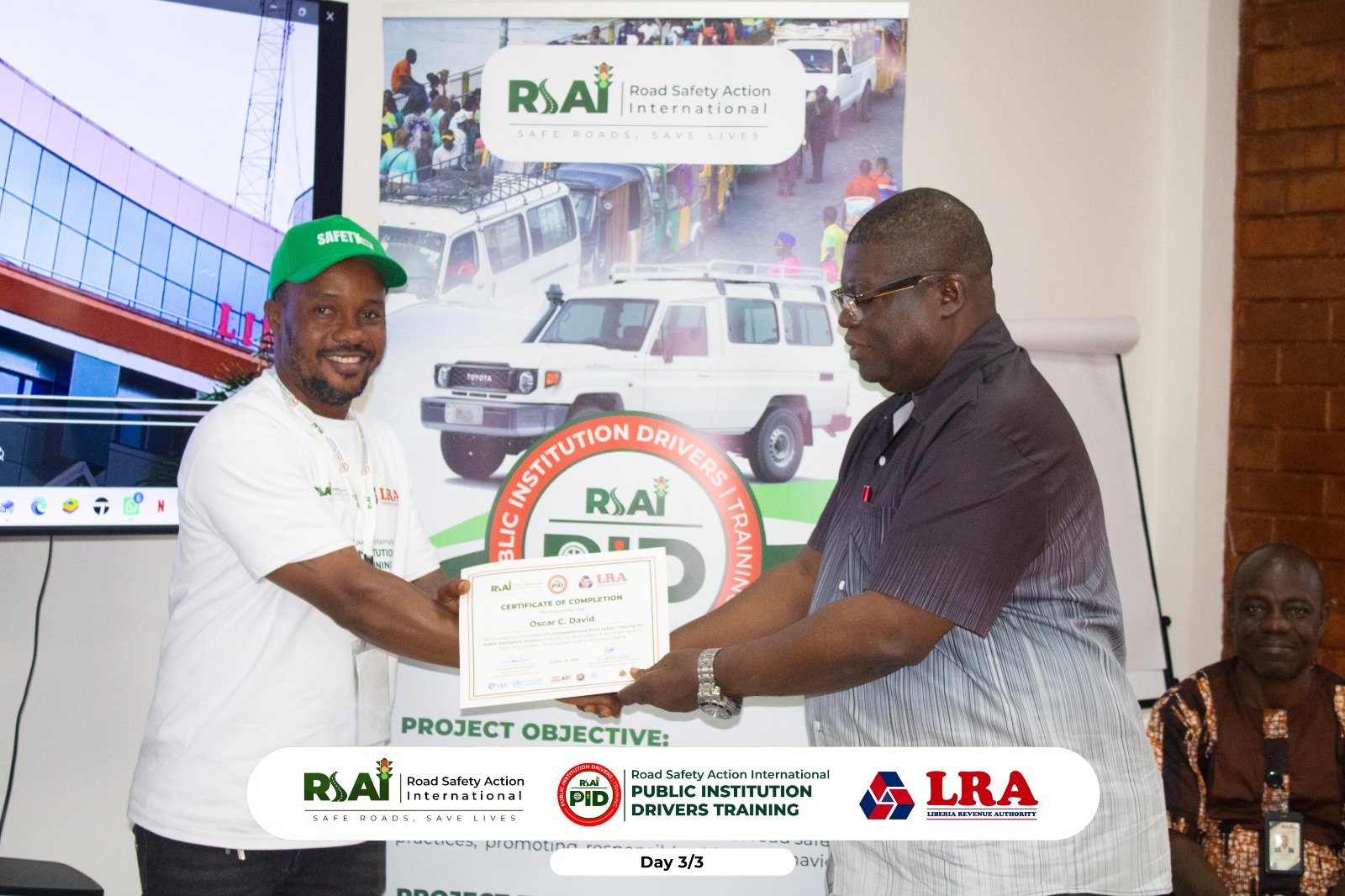
The completion of the LRA PID Training Program reflects RSAI's continued commitment to safer mobility through institutional partnerships and practical capacity development. RSAI extends its appreciation to the leadership and personnel of the Liberia Revenue Authority for their collaboration and participation.
RSAI remains committed to working with the LRA and other public and private institutions to expand access to the PID Training Program. As Liberia continues its efforts to reduce road traffic crashes, partnerships that invest in knowledge, responsibility, and safer transportation practices remain essential.
Because investing in road safety is investing in people, institutional performance, and the future of safer mobility in Liberia.
Photos from the training