Enhancing Driver Safety in Public Institutions: RSAI's Fifth Public Institution Drivers Training (PID) with NASSCORP in Liberia
In Liberia, road safety remains one of the country's most urgent public safety challenges. Every day, crashes involving commercial and institutional vehicles continue to place lives at risk, disrupt operations, and create costly setbacks for organizations and communities alike. While national road safety conversations often focus on infrastructure and traffic enforcement, one critical factor remains central to improving outcomes: the drivers responsible for moving people, equipment, and institutions safely across the country.
For Liberia's public institutions, transport is more than mobility—it is operational continuity. Every official assignment, field visit, inspection, emergency response, and staff movement depends on drivers and vehicles functioning safely and efficiently.
Recognizing this need, Road Safety Action International (RSAI) continues to lead practical road safety reform through its Public Institution Drivers (PID) Training Program—a specialized initiative focused on strengthening institutional transport safety across Liberia.
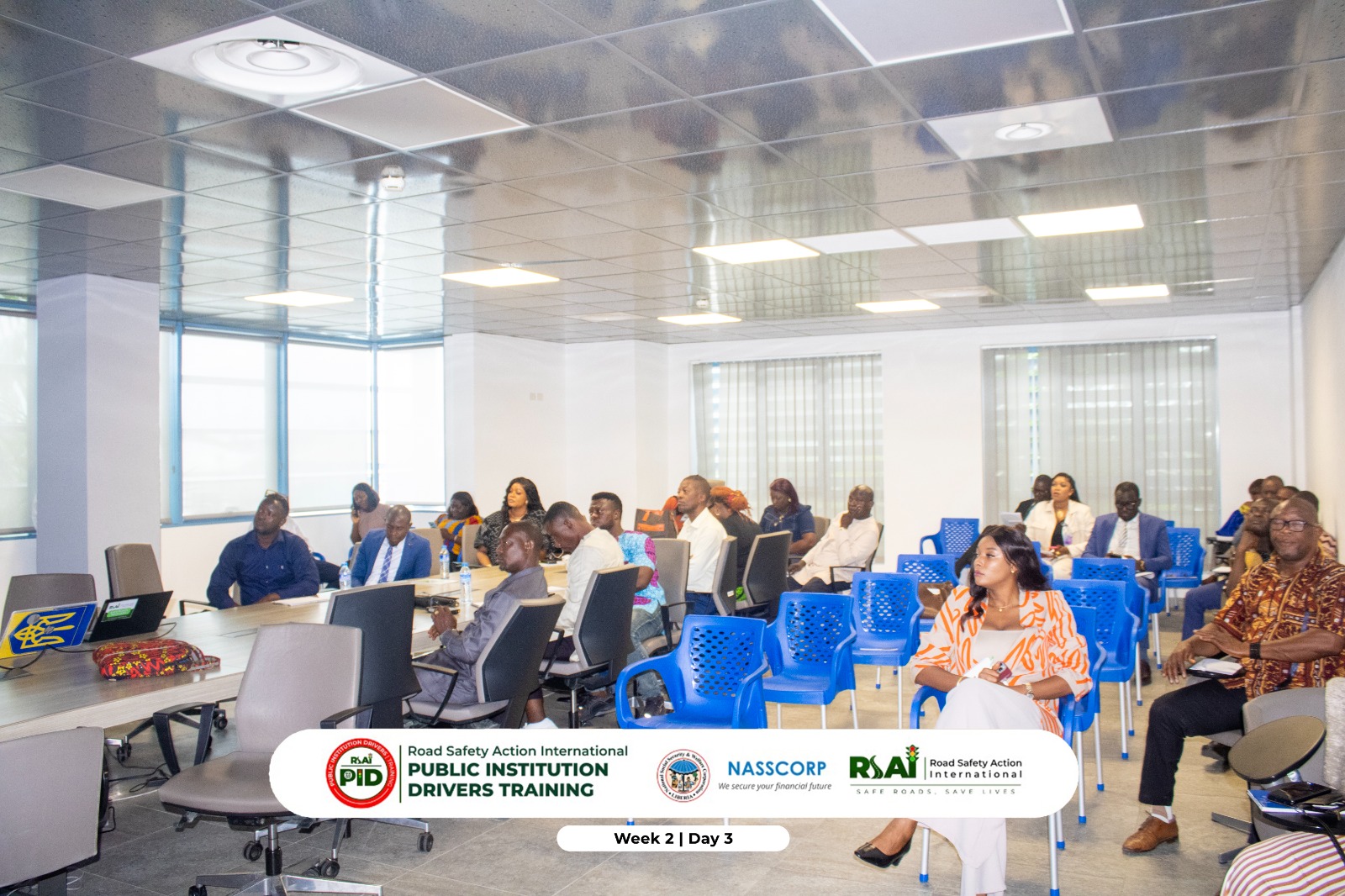
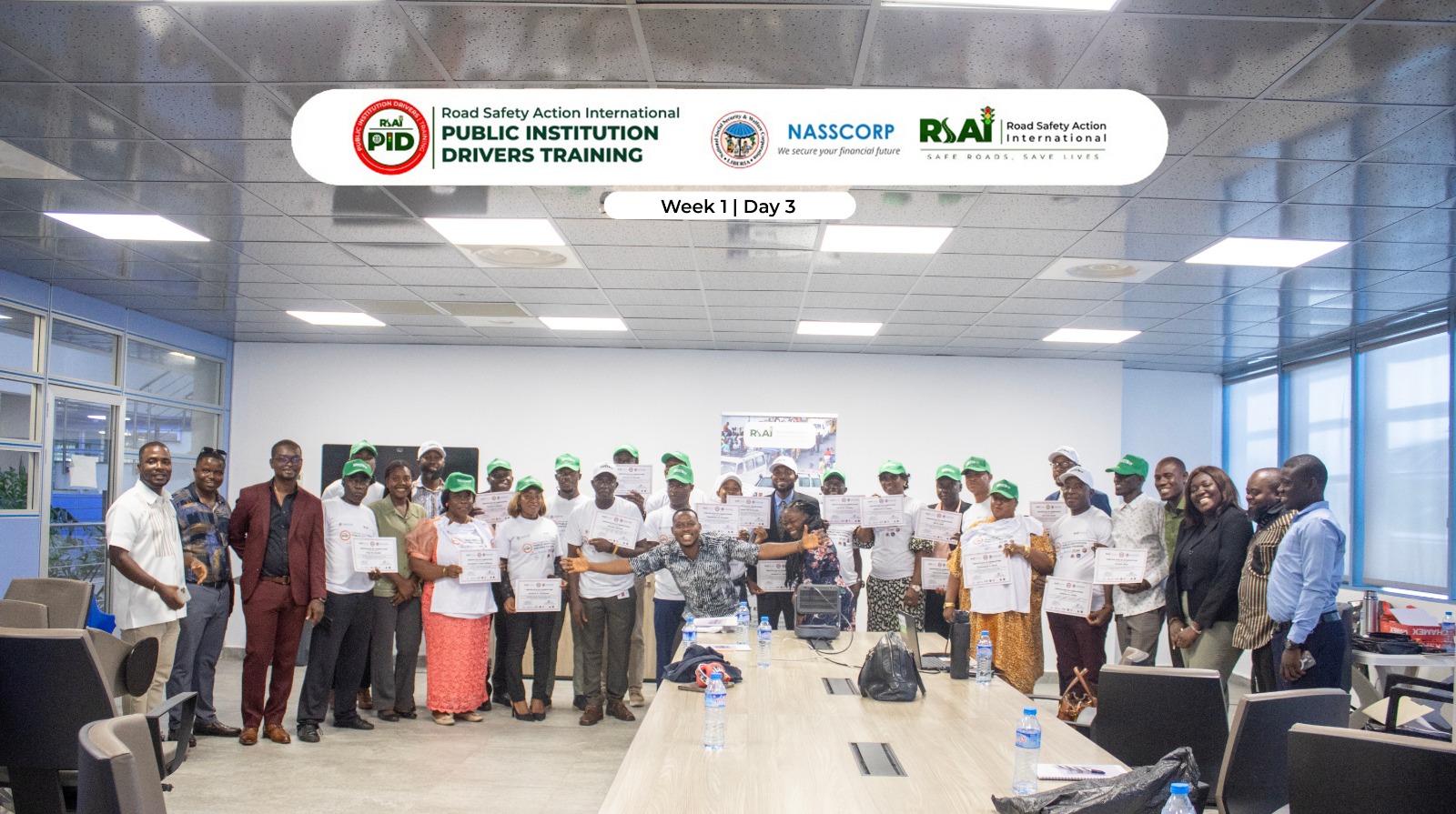
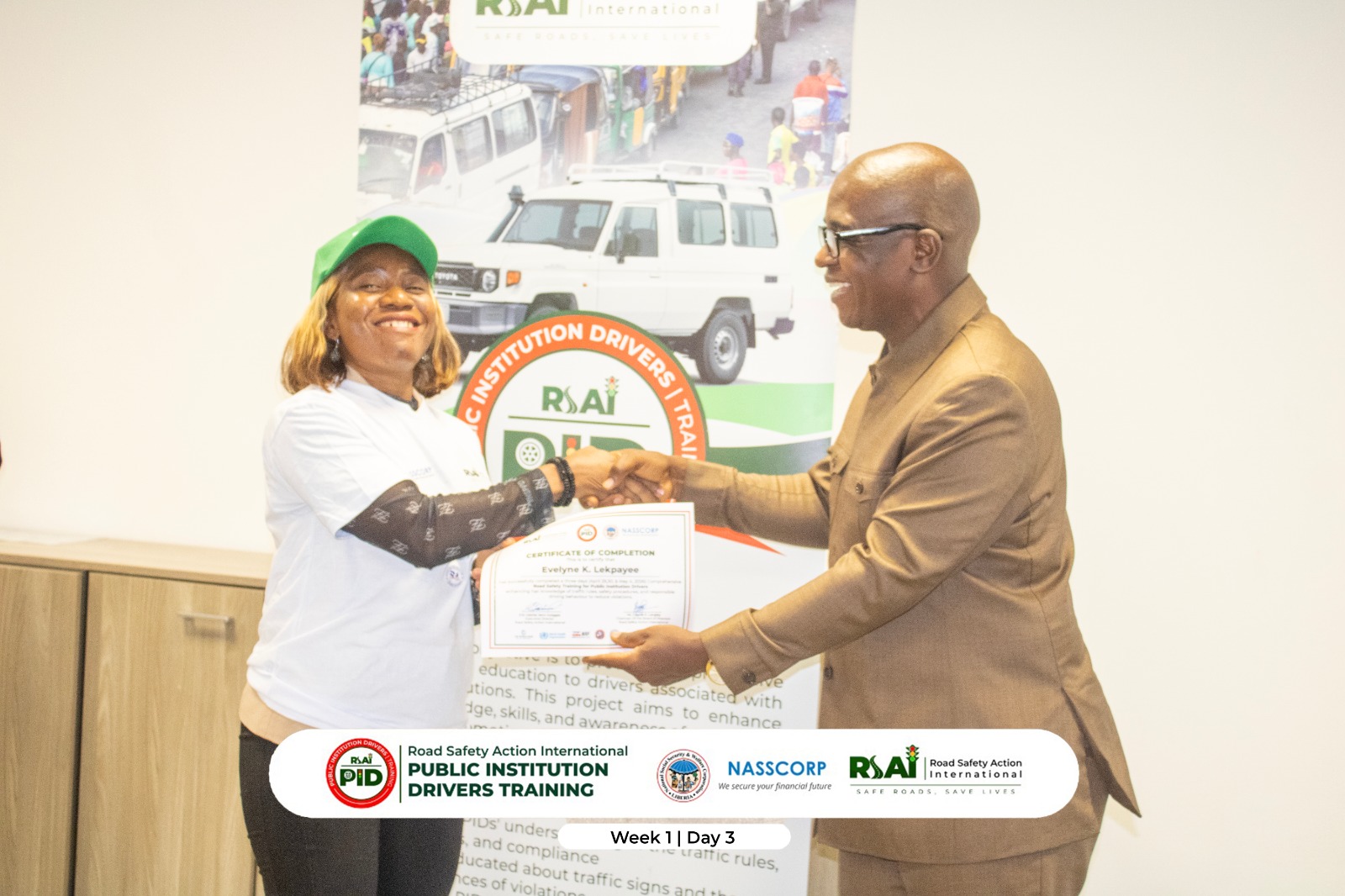
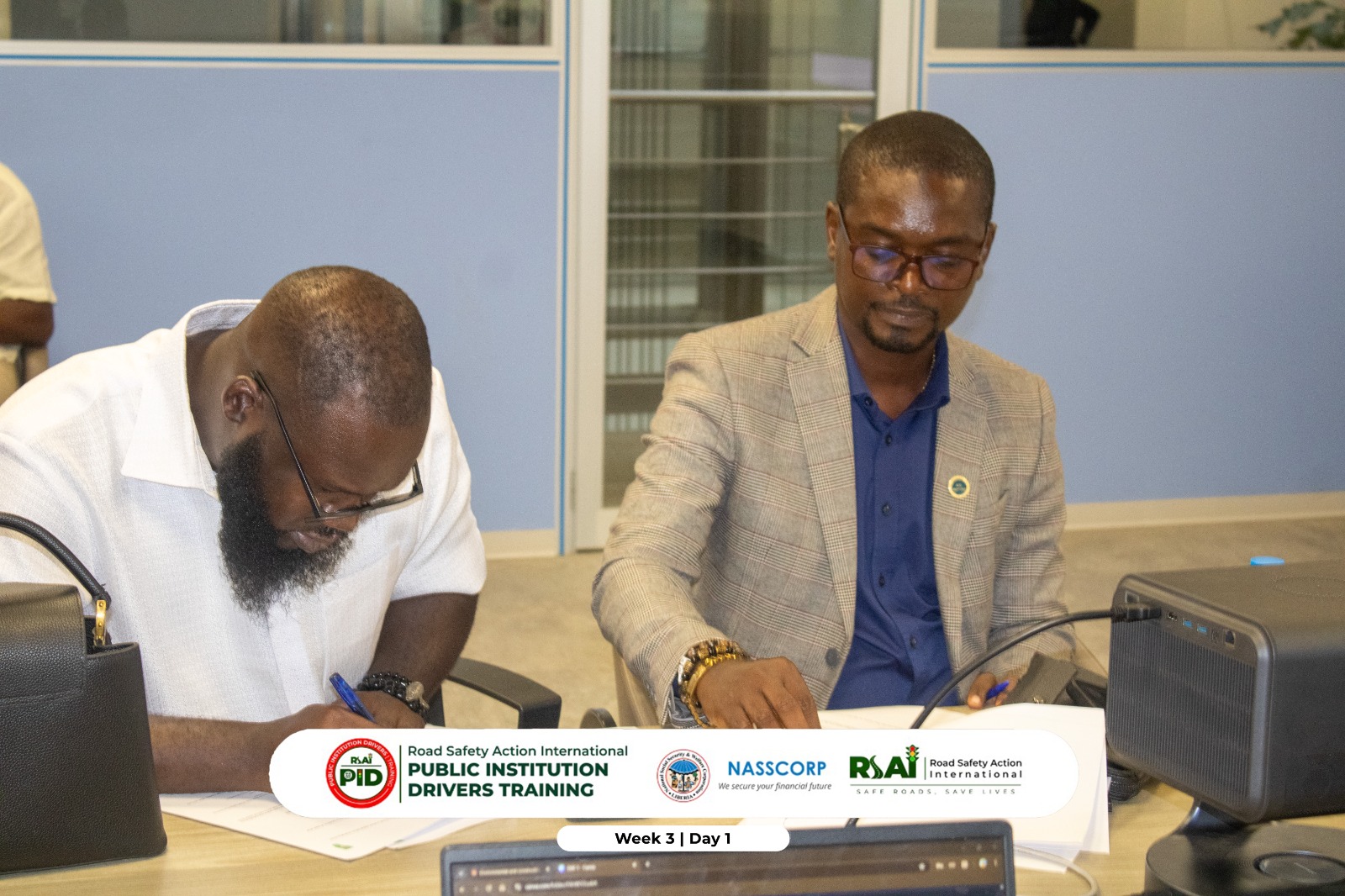
In May 2026, RSAI successfully completed its fifth Public Institution Drivers Training Program in partnership with the National Social Security and Welfare Corporation (NASSCORP), providing professional road safety training for NASSCORP drivers and vehicle users while reinforcing the institution's commitment to workplace safety and operational excellence.
A Practical Approach to Institutional Road Safety
Road traffic crashes affect more than vehicles—they affect productivity, service delivery, institutional resources, and the wellbeing of staff.
For institutions like NASSCORP, where transportation plays a critical role in supporting day-to-day operations and staff movement, ensuring drivers are equipped with modern road safety knowledge and practical emergency response skills is essential.
RSAI's partnership with NASSCORP was designed specifically to strengthen institutional transport systems by building capacity around safe driving behavior, preventive vehicle management, emergency preparedness, and transport accountability.
The program was delivered through a hybrid four-batch training model, including:
This blended structure allowed RSAI to maintain strong engagement while accommodating operational schedules and ensuring participants had full access to learning opportunities.
Why Institutional Driver Training Matters
Institutional drivers carry a unique responsibility.
They are entrusted with transporting staff, protecting organizational assets, supporting field operations, and representing the professionalism of the institutions they serve. A single unsafe decision on the road can affect not only the driver, but passengers, operations, and the broader public.
Yet many institutional drivers across Liberia continue to work without access to consistent professional road safety training tailored to their operational realities.
RSAI's PID Training Program addresses this challenge directly by equipping participants with the knowledge and practical skills needed to reduce road risks and strengthen transport systems from within.
The NASSCORP training also included vehicle users and relevant personnel, reinforcing the idea that road safety is a shared institutional responsibility—not just a driver issue.
Five Core Training Pillars for Safer Institutional Transport
The NASSCORP PID Training was structured around RSAI's five integrated road safety pillars:
1. Institutional Road Safety & Professional Driver Responsibility
Participants explored road safety fundamentals while strengthening understanding of driver accountability, workplace ethics, discipline, and professional conduct in institutional transport operations.
2. Safe Road Infrastructure & Hazard Awareness
Training focused on recognizing road hazards, understanding traffic environments, adapting to poor road conditions, and reducing risks through better hazard anticipation.
3. Safe Vehicle Operation & Preventive Maintenance
Drivers received instruction on vehicle inspections, mechanical defect identification, preventive maintenance routines, and operational readiness checks.
4. Safe Road User Behavior & Traffic Law Compliance
Participants strengthened understanding of Liberia's traffic laws while discussing high-risk driving behaviors such as speeding, distraction, fatigue, and unsafe overtaking.
5. Emergency Response & Post-Crash Management
The program concluded with emergency preparedness and practical response exercises, including crash scene safety, casualty stabilization, fire extinguisher handling, and incident management.
Interactive Learning with Real-World Application
RSAI's training methodology focused on practical learning and participant engagement.
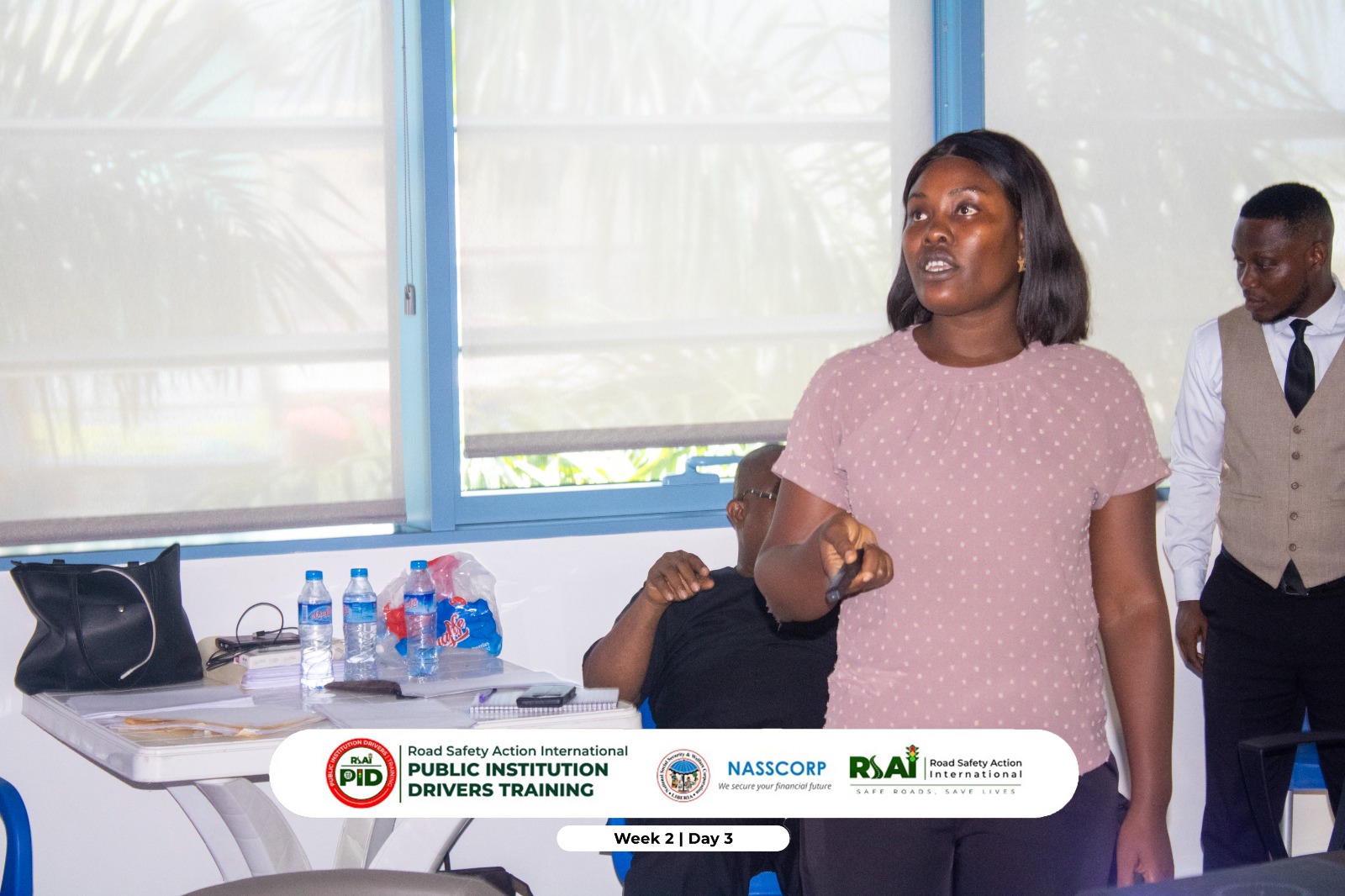
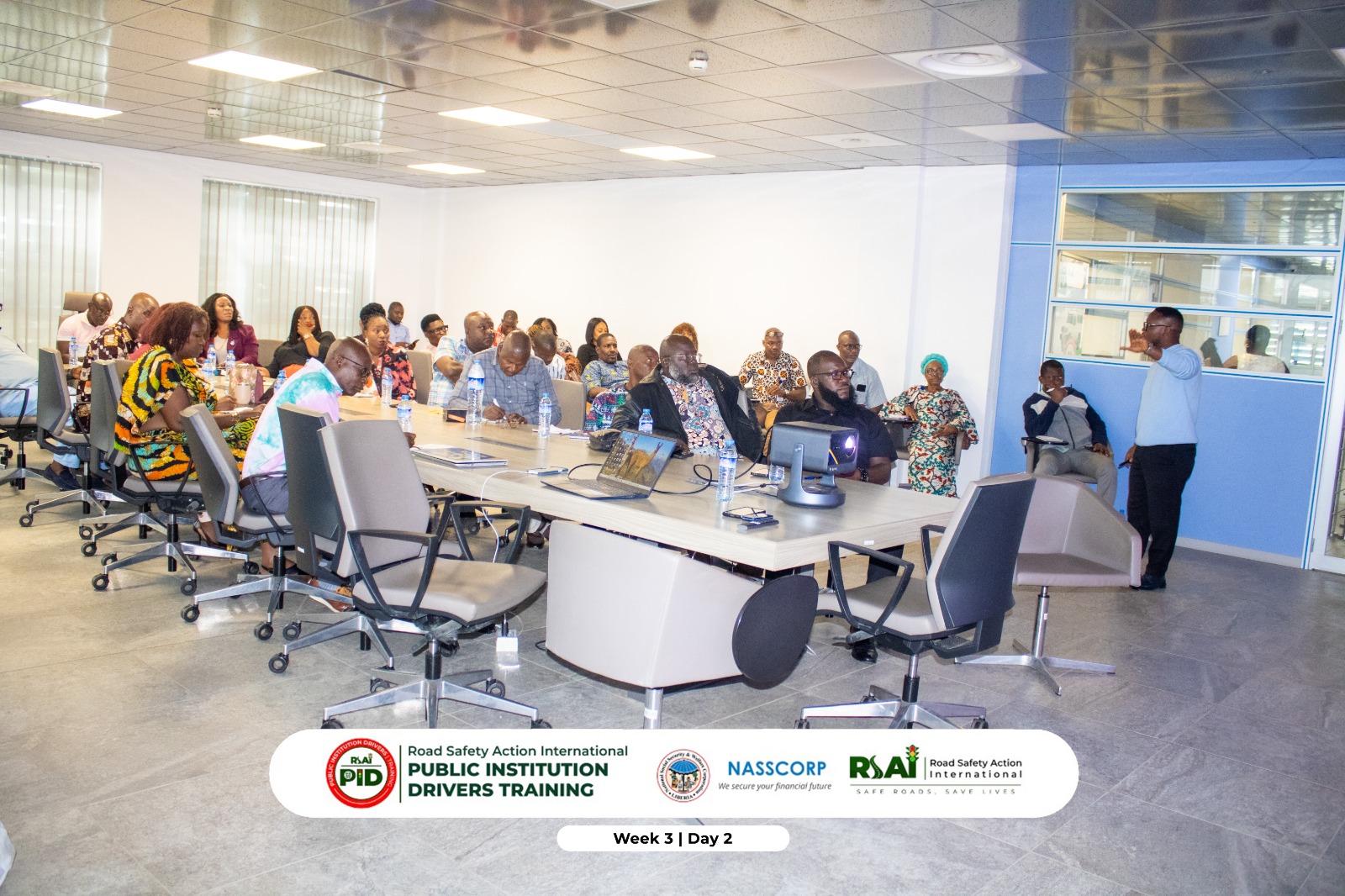
Across the three in-person batches and virtual delivery session, participants took part in:
The sessions encouraged participants to connect technical road safety principles with their day-to-day responsibilities inside NASSCORP.
By combining in-person facilitation with virtual learning access, RSAI ensured participants could engage fully while balancing official assignments and institutional responsibilities.
Strengthening NASSCORP's Transport Safety Systems
Beyond individual skills development, the training was designed to strengthen institutional transport management systems within NASSCORP.
Expected outcomes include:
These improvements directly support NASSCORP's broader commitment to workforce welfare, institutional sustainability, and operational effectiveness.
RSAI's Growing Impact in Liberia
The successful completion of the NASSCORP engagement marks RSAI's fifth Public Institution Drivers Training Program, reflecting the organization's expanding leadership in institutional road safety and occupational transport reform across Liberia.
Through practical training, strategic partnerships, and evidence-based road safety interventions, RSAI continues to support institutions in building safer transport systems that protect lives, strengthen operations, and improve service delivery.
RSAI extends sincere appreciation to the leadership, drivers, and staff of NASSCORP for their collaboration and active participation throughout the program.
RSAI looks forward to expanding this collaboration and engaging with other public and private institutions across Liberia to implement the Public Institution Drivers (PID) Training Program, as part of its continued commitment to improving road safety and strengthening institutional transport systems nationwide.
As Liberia continues advancing national road safety priorities, partnerships like this demonstrate what is possible when institutions invest in safer drivers, safer vehicles, and safer systems.
Because road safety is more than movement—it is responsibility.
And safer institutions begin with safer journeys.
Some photos from the Training